
I don’t work Fridays, I work part-time four days a week. Because I don’t have kids or other responsibilities that fill that day, it is mine. This Friday I met with an old boss for lunch, we meet probably every year and catch up and it’s lovely. We spent a lot of time travelling for work when I worked for him and so got to know him a lot better than some of the other people I worked for. He’s always been unfailingly kind to me and is an excellent sounding board for advice, it’s like having lunch with a friend/dad hybrid.
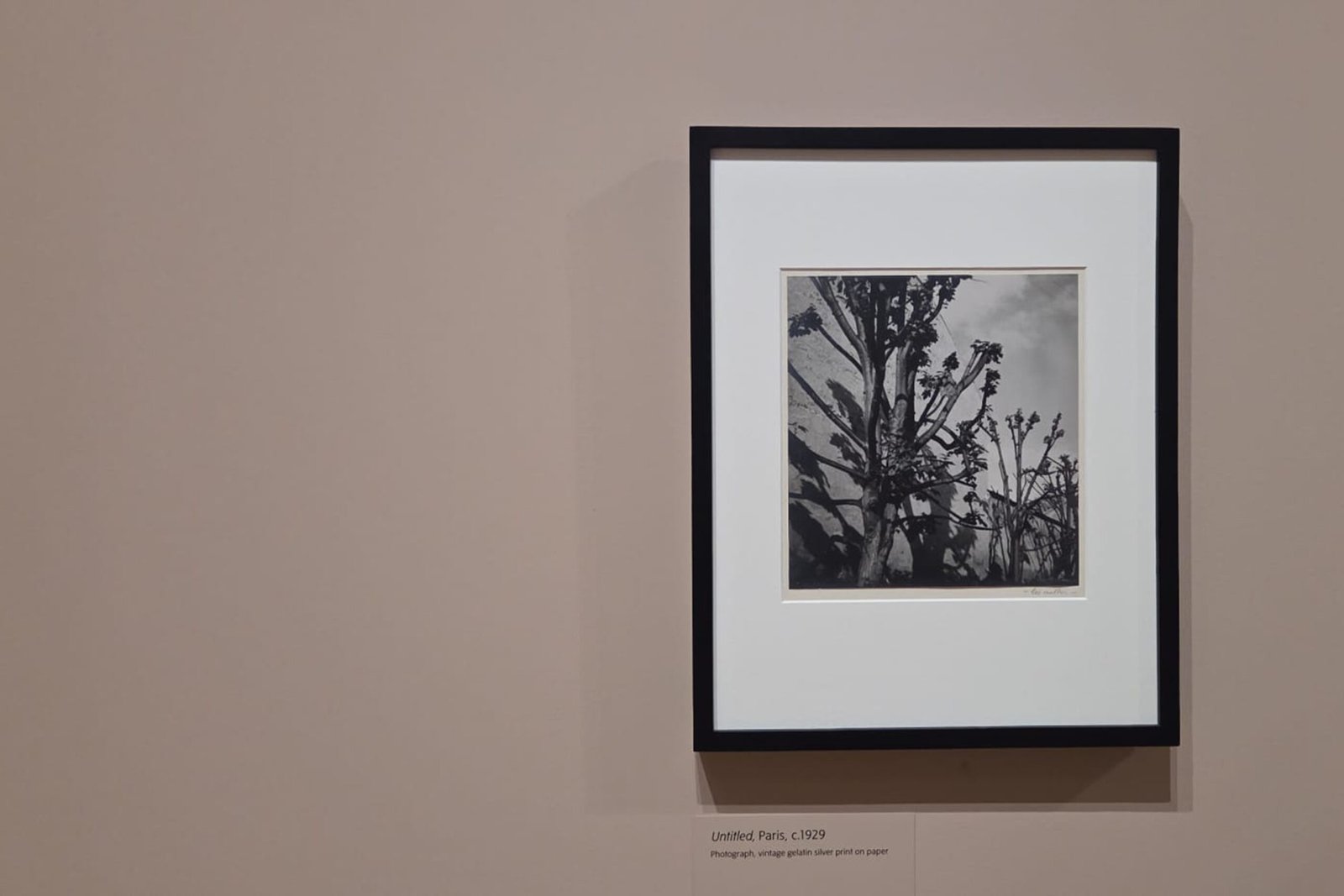
After lunch in Soho, I had the rest of the afternoon to myself and as I signed up recently for a three month trial Tate membership I decided to walk over to the Tate Britain to see the Lee Miller exhibition before it closes in mid-February. It had a stellar review in the Guardian, so I was interested in seeing it.
I must admit I had mixed feelings. I suppose with all artist retrospectives you have to show their development as an artist, and there is of course some interest in the general story of who they are and how they became who they did, together with how their work evolved. But, having said that, after early photos and work with Man Ray, there were a handful of rooms where, I’ll be honest, I started to question whether the works were really art. They were framed nicely and I’m sure that the way the negatives had been developed took skill, and people were duly filing around the perimeter of the rooms looking at them all very closely, but, were they art? Was it a case of the Emperor’s New Clothes? Or, if she was around, would Lee Miller herself wonder why some of these photos were being displayed?
I suppose for me when it comes to photography, the kind of photos that interest me are either those that have a unique viewpoint, those that record a particular moment in time, those that are technically interesting, those that are beautiful or those that capture what Cartier-Bresson expressed as the ‘decisive moment’. The problem for me with the middle of the exhibition in the pre-Vogue years is that rooms full of photographs seemed to tick none of these boxes for me. A photo, for example, of the facade of the Guerlain store, could have easily been found at home on Tumblr or the early days of Instagram when it would have had a Valencia filter thrown over it and a hashtag slapped onto the caption #Paris.
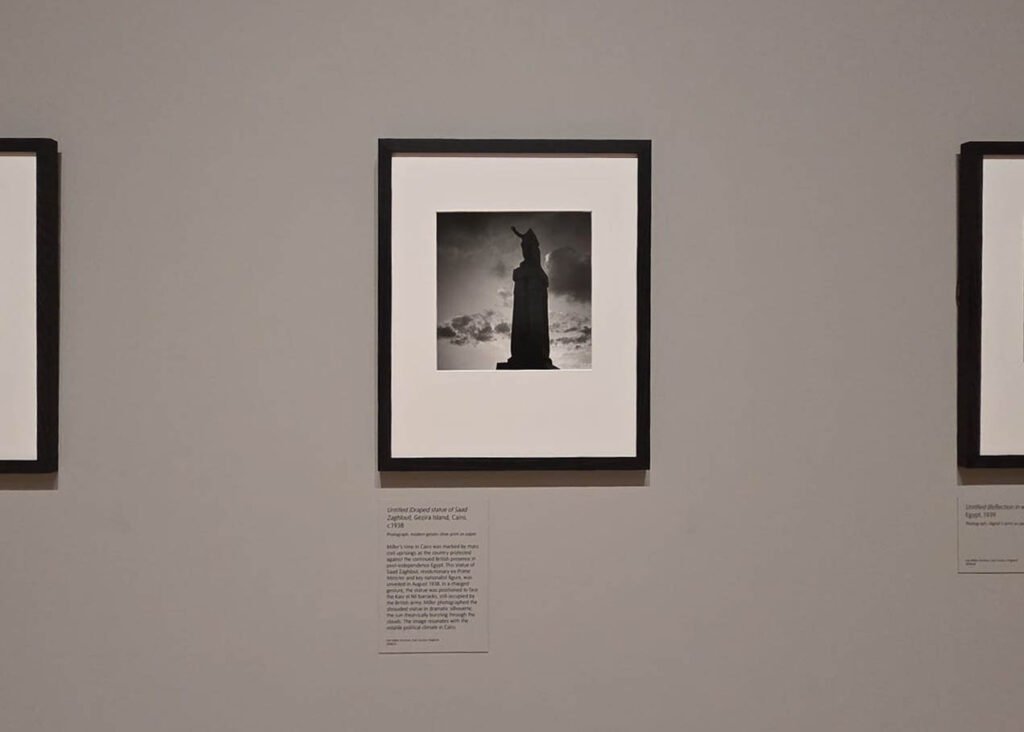
A photo of a statue was described as being photographed in dramatic silhouette. One could arguably say the same of Brooklyn Beckham’s elephant (my mental headspace has been more occupied with the Beckham family than it rightfully should be following Brooklyn Beckham’s nuclear Instagram statement). Incredible to see, but why is one art and one not?
Now, that’s not to say I didn’t enjoy the exhibition. I very much liked the work she did for Vogue, both the light and airy and the war photojournalism (which they also published – can someone please produce a magazine now that is full of both very serious content but also frippery and silly things?). Her photos from Dachau and Buchenwald were unflinching and devastating and super important to see, particularly as the world becomes a much scarier place.
